
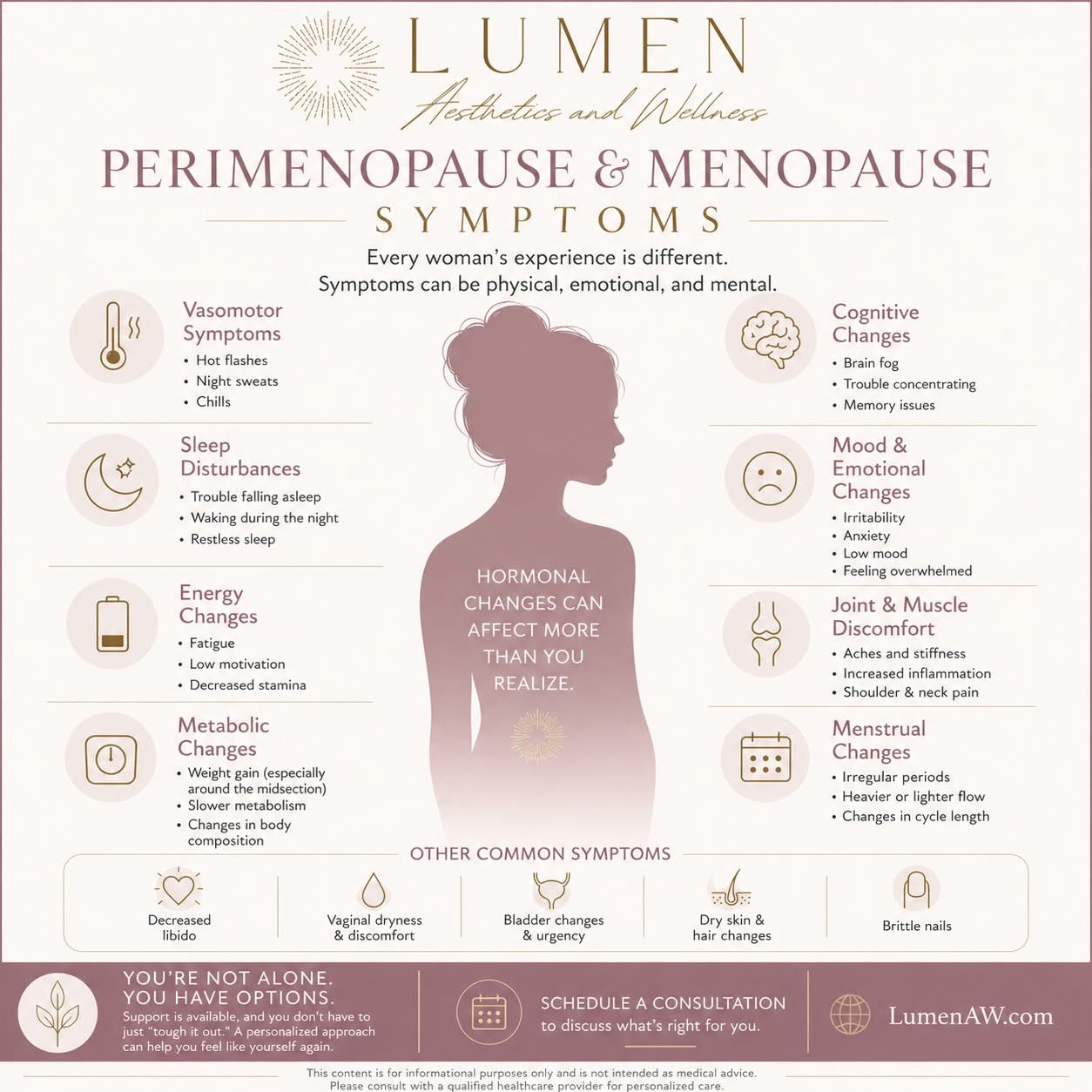
Common Perimenopause and Menopause Symptom Patterns
Symptoms often cluster in ways that reflect how hormones affect different systems in the body. Some women also experience decreased libido, vaginal dryness, bladder urgency, dry skin, hair changes, or brittle nails. Not every symptom is necessarily hormonal but often related. These symptoms can have multiple causes. A thoughtful evaluation helps determine what may be hormonal, metabolic, lifestyle-related, or related to another medical concern.
Vasomotor Symptoms
Hot flashes, night sweats, chills, and temperature sensitivity are among the most recognized menopause-related symptoms.
Sleep & Energy Changes
Difficulty falling asleep, waking during the night, restless sleep, fatigue, low motivation, and reduced stamina are common concerns.
Metabolic Changes
Many women notice weight gain, especially around the midsection, slower metabolism, and changes in body composition.
Cognitive Changes
Brain fog, trouble concentrating, and memory changes are frequently reported during the menopausal transition.
Mood & Emotional Changes
Irritability, anxiety, low mood, and feeling overwhelmed may occur as hormones fluctuate, though these symptoms should always be evaluated in context.
Joint & Muscle Discomfort
Aches, stiffness, increased inflammation, and shoulder or neck discomfort may also appear during this stage of life.
Menstrual Changes
Irregular periods, heavier or lighter flow, and changes in cycle length are often early signs of perimenopause.
A More Complete Approach to Hormonal Health
At Lumen Aesthetics & Wellness, care is focused on looking at the full picture—not isolated symptoms. Perimenopause and menopause can affect quality of life in ways that are often overlooked, and every woman’s experience is different.
Your care plan may include evaluation of hormonal health, metabolic factors, nutrition, lifestyle, sleep, and symptom patterns. When appropriate, treatment options may include Hormone Replacement Therapy, metabolic support, targeted supplementation, and lifestyle strategies.
Not every patient needs medication. Not every plan looks the same. The goal is to create an individualized, evidence-informed approach based on your symptoms, history, labs, and goals.
Start with a Personalized Evaluation
- Comprehensive history and symptom review
- Review of prior lab work and ordering additional labs if needed
- Personalized treatment plan, including nutrition, medications, supplements, and lifestyle support when appropriate
- Prescriptions routed to your retail pharmacy when covered by insurance
- Curated lower-cost alternatives for non-covered therapies when appropriate
Key Takeaways about HRT


Why Start in Perimenopause?
Perimenopause is often when symptoms spike—not because hormones only drop, but because they swing. Treating earlier can steady the roller coaster and help you stay ahead of the effects.
Many women notice improvements within weeks, like:
- Fewer hot flashes/night sweats
- Better sleep and clearer thinking
- More even moods
- More comfortable sex and improved libido
- More stable daytime energy
Large peer reviewed studies, statements and trials support these symptom improvements in women as they near the menopause transition. (Lippincott Journals)
Q’s
How fast will I feel better?
Many women notice improvements in hot flashes, sleep, and mood within 4–6 weeks, with continued gains as we fine-tune. (Lippincott Journals)
How long should I stay on HRT?
It’s individualized. Fracture protection and symptom relief last while you’re on therapy; benefits diminish after stopping, so we tailor duration and revisit yearly. (PubMed)
Ready to feel more like you again?
If perimenopause is disrupting your days (and nights), you don’t have to wait. Book a consultation to see if HRT is a good fit—get started.
A mental-health bonus
In a randomized clinical trial, transdermal estradiol plus intermittent micronized progesterone cut the risk of developing clinically significant depressive symptoms during the menopause transition by about half vs placebo over 12 months. (PMC)
References are studies that have been peer-reviewed & guideline sources.
- The Menopause Society (NAMS) 2022 Position Statement: HRT is the most effective therapy for vasomotor symptoms and GSM; prevents bone loss/fractures; benefit-risk depends on timing, type, dose, route. (Lippincott Journals)
- USPSTF 2022 Recommendation: Do not use menopausal hormone therapy for primary prevention of chronic conditions in postmenopausal persons. (uspreventiveservicestaskforce.org)
- ELITE Trial (NEJM 2016): Early (but not late) estradiol initiation slowed progression of subclinical atherosclerosis (CIMT). (New England Journal of Medicine)
- Fracture Reduction: WHI and other RCTs show reduced fracture risk during active use of HRT. (PubMed)
- Mood Benefit RCT (JAMA Psychiatry 2018): Transdermal estradiol + intermittent micronized progesterone prevented onset of clinically significant depressive symptoms in perimenopausal/early postmenopausal women. (PMC)
- WHI 18-Year Follow-Up (JAMA 2017): No increase in long-term all-cause mortality after 5–7 years of MHT vs placebo. (JAMA Network)